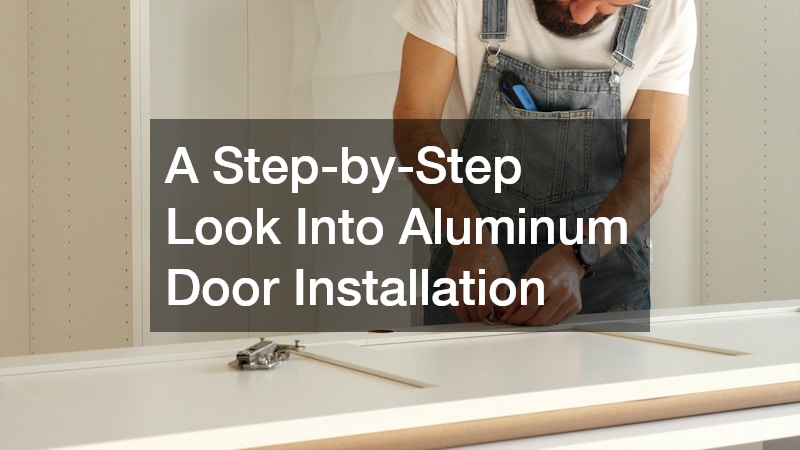
There’s no denying that Aussie homes undergo a lot of stress from the elements. Whether a property is situated right on the coast or battling the harsh heat of the outback, upgrading architectural fixtures is a fantastic way to add value and durability. Choosing an aluminum door for a property is an excellent choice because it won’t warp like timber, and it requires next to no maintenance.
While these modern fixtures offer incredible longevity, achieving a flawless finish requires a high level of precision. Understanding the intricate process that qualified tradespeople follow helps homeowners appreciate the skill involved in a professional installation.
Let’s take an in-depth look at exactly how professionals get the job done right.
Gathering Specialised Tools & Materials
Before a licensed installer even begins dismantling an old entryway, they ensure they’ve got a comprehensive array of trade-grade gear ready to go. Professional teams rely on precision equipment to ensure the final fit is absolutely perfect.
Here is what a professional installation crew brings to the job site:
- High-precision spirit levels and laser measuring tools
- Heavy-duty hammer drills with specialised masonry and timber bits
- Commercial-grade silicone sealant and industrial caulking guns
- Structural plastic packing shims of varying thicknesses
- Full personal protective equipment (PPE), including safety glasses and gloves
- Heavy-duty fixing screws engineered for specific wall framing types
It’s also vital to note that professionals cross-reference local Australian Building Codes before commencing work. They verify that the selected aluminum door meets the precise wind ratings and structural requirements for that specific geographic region.
Preparing the Opening
Once the tools are sorted, the team prepares the brickwork or timber opening. When replacing an old unit, tradespeople carefully extract the existing frame to avoid damaging the surrounding internal plaster or external brickwork.
Once the old frame is out, the installers use commercial vacuums to completely clear away any leftover dust, old sealant, wood splinters and construction debris. A pristine opening is essential because even a tiny piece of rubble can throw a new frame entirely out of alignment.
The installers then measure the opening width and height at multiple points. They verify that the new aluminum door frame has the correct clearance tolerances, leaving just enough room for precise structural adjustments.
Setting & Levelling the Frame
This is the most critical part of the entire installation process. If the frame isn’t perfectly square, the door will not slide or swing properly, and the locking mechanisms will never line up.
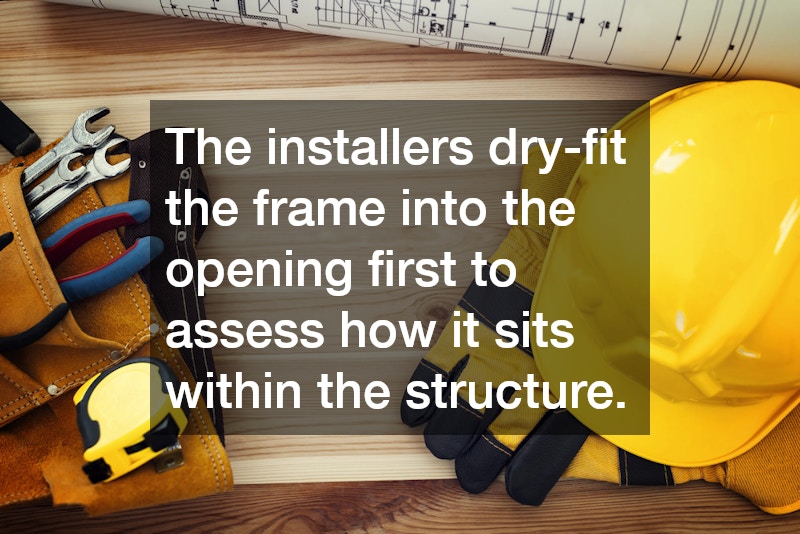
The installers dry-fit the frame into the opening first to assess how it sits within the structure. They utilise high-grade spirit levels on the sill, jambs and head to check for absolute plumb and level.
To get everything perfectly straight, they employ structural packing shims:
- Installers insert packers directly behind the fixing points so the frame doesn’t bow when secured.
- They focus heavily on the hinge side or the rolling side to manage the heavy weight of the glass panels.
- The team constantly re-checks alignment after adjusting each individual packer.
Fixing the Frame Securely
Once the installation team is completely satisfied that the frame is level, plumb and square, they fix it permanently to the building structure.
They drill precise pilot holes through the frame and into the wall studs or masonry. When anchoring into brickwork, experienced tradespeople always use heavy-duty wall plugs to keep the anchors from pulling loose over time.
Fixing screws are driven in with careful torque control. Over-tightening must be avoided because it can easily bend the aluminium profile out of shape. Once the frame is secured, the installers double-check it one last time to ensure nothing shifted during the fastening process.
Hanging the Door Panels
With the frame rock-solid, the installers lift the heavy door panels into place. Because modern panels feature thick safety glass, this is always a two-person lift to ensure safety and prevent any accidental damage to the glass edges.
For sliding configurations, the team lifts the panel up into the top track first, then carefully guides the bottom rollers onto the lower track. For swinging variants, they align the heavy-duty hinges precisely and drop the hinge pins into position.
The installers test the movement immediately by operating the unit multiple times. They utilise the built-in adjustment screws on the rollers or hinges, fine-tuning the components until the door glides effortlessly.
Sealing & Finishing Touches
The final step involves making sure the new setup is completely weatherproof against heavy Australian downpours. The installers apply a flawless, continuous bead of external-grade silicone sealant all the way around the outside perimeter where the frame meets the wall.
Inside the home, they fill any structural gaps with high-quality insulation materials before neatly installing the timber architraves to conceal the packers. They then attach the handles, lock cylinders and any integrated flyscreens.
After a thorough clean of the tracks to remove any construction dust, the new aluminum door is fully operational. Entrusting this process to experienced professionals ensures the installation looks modern, functions flawlessly and protects the home for decades to come.